Cabinet and Wardrobe Panels: Why Birch Keeps Winning
Birch wins cabinet work for two unglamorous reasons: the face takes a finish evenly, and the panel holds its tolerance after machining. The published range covers 2.7 mm to 30 mm in thickness, with standard sheet formats at 1220 × 2440 mm and 1250 × 2500 mm plus a 1250 × 3000 mm option, and custom sizes available. For a wardrobe manufacturer, that combination removes more production problems than any single upgrade in raw material would.
Key takeaways
- Thickness runs from 2.7 mm to 30 mm, so backs, shelves and carcasses can come from one line.
- Standard sizes are the 1250 × 2500 mm and 1500 × 3000 mm formats alongside 1220 × 2440 mm, with custom formats to suit a cutting plan.
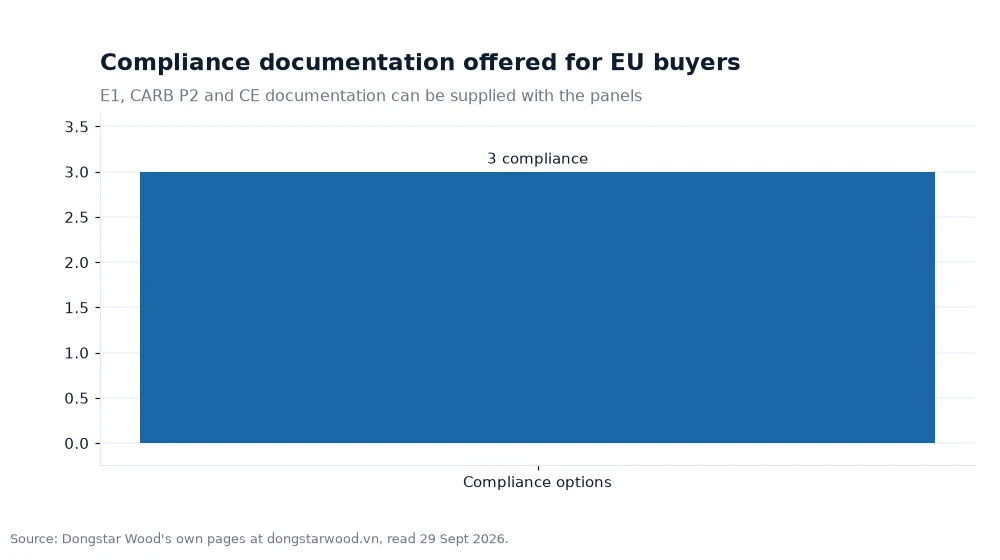
- Compliance paperwork is a three-part choice: E1, CARB P2 and CE documentation.
- A light cream to pale brown birch veneer face is uniform across panels, which is what makes staining and laminating predictable.
The machining argument
Cabinet shops judge a panel at the saw and the edgebander, not at the delivery truck. A board that tears out along a cut, chips under a router bit or changes dimension overnight turns into rework, and rework eats the margin that a cheaper sheet was supposed to protect. Birch Plywood is engineered around that problem: a multi-layer hardwood core, calibrated veneers and a panel structure described as resistant to warping during machining, with the face built to take cutting, CNC machining, sanding and edge processing with minimal tear-out.
For a wardrobe line running nested-based CNC, that matters more than any finish specification — it is the standard a Birch Plywood Supplier has to meet before a cutting plan can be run without rework. Tear-out on a visible door panel is scrap; tear-out on a carcass side is a repair. Both costs are removed by the same panel property.
Thickness: one range, several jobs
A single 2.7 mm to 30 mm range covers the whole furniture build-up. Thin sheets in the 2.7 mm to 6 mm band suit cabinet backs, drawer bottoms and curved work. Mid-range 12 mm to 18 mm covers carcass sides, shelves and wardrobe uprights. Thick panels up to 30 mm take worktops, structural framing and furniture that carries load rather than closing a space.
Ordering from one range keeps colour and core consistent across a project. A wardrobe where the back, the sides and the shelf come from panels with different core builds will show the difference once the doors are hung and the interior light hits the shelf edges.
Face grades you will actually be quoted
The grade scale is a conversation about visible defects, and it pays to understand it before the quotation arrives. A-grade faces are described as outstanding, with knots and burls permitted in places. B-grade carries more and larger burls and knots with some colour variation. C-grade is smooth and sound but shows even more variation. A repaired-defect grade is free of open defects while permitting some repaired defects, and it is the practical choice for surfaces that will be laminated or painted rather than left natural.
Match the grade to the surface, not to the project. Doors and visible end panels deserve the higher grades; interior partitions, drawer boxes and backs rarely do.
Compliance and the European paperwork
Compliance is where a European order starts to separate suppliers. Three options are published for this line — E1, CARB P2 and CE documentation — built on low-emission glue systems. CARB P2 addresses formaldehyde emission for the North American market, E1 covers the European interior requirement, and CE documentation supports construction and interior applications where a declared performance is required.
| Item | Published options | Where it is used |
|---|---|---|
| Compliance | E1, CARB P2, CE documentation | Interior furniture for EU and North American markets |
| Thickness | 2.7–30 mm | Backs, shelves, carcasses, worktops |
| Standard sizes | 1220 × 2440, 1250 × 2500, 1250 × 3000 mm | Cutting plans and panel optimisation |
| Face | Light cream to pale brown birch veneer | Staining, laminating, painting |
| Packing | Protective wrapping, steel strapping, wooden pallets | Export handling and container loading |
Worked example: covering a wardrobe programme
Take the 1250 × 3000 mm format as the example. In metres it is 1.25 m × 3 m = 3.75 m² of panel per sheet, so a 1,000-sheet order carries 1,000 × 3.75 m² = 3,750 m² of board. If a fitted wardrobe run consumes 6.8 m² of cut panel including waste, the order covers 3,750 ÷ 6.8 = 551 wardrobe units.
Now split the thicknesses. Assume each unit takes 5.2 m² in 18 mm carcass panels and 1.6 m² in 3 mm back panels. That is 5.2 ÷ 6.8 = 76% of the order in 18 mm and 1.6 ÷ 6.8 = 24% in 3 mm, or roughly 2,850 m² and 900 m² across the two thicknesses. Both calculations are examples from published sizes, not quotations.
Where a birch face ends up
The application list for this line is broader than cabinetry. Furniture panels cover cabinets, wardrobes, tables and chairs; interior joinery covers wall panelling, shelving and partitions; architectural work covers decorative panels, trim and mouldings; commercial interiors cover hotels, offices and retail fit-outs. Marine and musical instrument bodies appear on the same page, which says something about how the core is built rather than about the finish.
A uniform pale face is a practical advantage in commercial work. Retail fixture panels are often laminated or painted in one colour across a whole shop, and a face that varies between boards will show through a thin laminate as a patchwork. Consistency on that axis is worth more than a marginally harder surface.
Packing, labelling and the first container
Export packing for this line is described as protective wrapping, steel strapping and pallets, while labelling and packaging can be adapted for bigger project runs. Custom labelling is the detail that saves site time: if each pallet is marked with the panel size, thickness, face grade, batch and destination zone, the container can be unloaded straight into production rather than sorted in the yard.
For the first shipment, ask for the batch number and the compliance documentation to appear in the same document set as the packing list. A buyer who can trace a panel from pallet label back to a press batch has a much shorter conversation if a cabinet door ever fails after assembly.
Frequently asked questions
Is a birch face worth the premium over a utility veneer?
It is when the surface stays visible or gets a thin finish. A uniform cream-to-pale-brown face holds stain and laminate evenly, so less material is lost to colour sorting. Where the panel will be covered by a thick laminate or hidden inside a carcass, a lower face grade costs less and performs the same job.
Which thickness should a wardrobe carcass use?
Carcass sides, shelves and uprights are commonly specified in the 12 mm to 18 mm band, with 18 mm used where load or span is significant. Backs and drawer bottoms sit at the thin end, from 2.7 mm upward, because they close the unit rather than carry it.
Can the panels be pre-cut and pre-labelled for a project?
Custom sizes and custom packaging are both listed as available, and labelling can be adapted for large projects. Send the cutting plan with the enquiry so the mill can match panel formats to the optimiser rather than to a standard sheet size.
Building the specification sheet
One page per project is enough: panel size, thickness, face grade, compliance route and packing mark. Buyers sourcing for a mixed furniture programme can compare formats against the wider commercial range, and the manufacturing background behind the line is set out on the company profile page. Once that page is fixed, the quotation becomes a comparison of the same specification across suppliers instead of a comparison of different products.
Thicknesses, formats and compliance options above are quoted from the pages of the supplier's website, as checked on 29 September 2026 as the source for this briefing as the source for this briefing and taken for this guide[1].